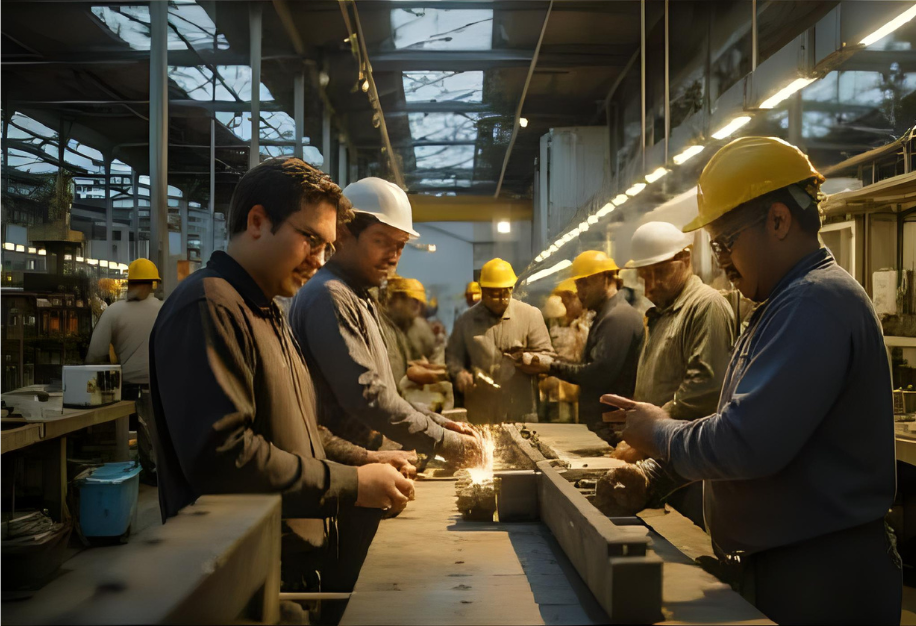

From Loans to Leadership: Financial Institutions at the Center of Efforts to Rebuild U.S. Manufacturing Strength
For much of the 20th century, the United States was the world’s manufacturing powerhouse. Steel mills, auto plants, textile factories, and machine shops employed millions of Americans and anchored local economies. Manufacturing, alongside mining and agriculture, formed the bedrock of the American middle class, providing stable jobs with good wages and benefits, often requiring no more than a high school diploma but offering upward mobility for generations of families.
But beginning in the 1970s and accelerating in the decades that followed, manufacturing jobs were steadily offshored to countries with cheaper labor and fewer regulations. The global economy shifted, supply chains became more complex, and U.S. communities once defined by bustling factories saw shuttered plants, declining tax bases, and shrinking opportunities. The erosion of manufacturing wasn’t just about jobs, it was about the loss of dignity, pride, and the economic backbone of towns across the nation.
Today, policymakers, business leaders, and community advocates are increasingly asking: What will it take to resurrect American manufacturing? The answer requires more than simply reshoring factories. It demands a full ecosystem: education, financial support, cultural shifts, technical innovation, and government policy to ensure that American manufacturing can thrive in the 21st century.
The Importance of Manufacturing to a Vibrant Economy
Key Statistics in Manufacturing Performance
Manufacturing once accounted for nearly 30% of U.S. GDP in the 1950s; today, it hovers around 11%. While output remains significant, the number of workers employed in manufacturing has fallen dramatically, from nearly 20 million in 1979 to fewer than 13 million today. The decline has been mirrored by the shrinking of middle class jobs that once supported home ownership, college education for children, and robust local economies.
Current Challenges Facing U.S. Manufacturing
When America offshored manufacturing, it exported not only jobs but also innovation. Many small and midsized manufacturers closed because they could not compete with low cost overseas production, leaving gaps in domestic supply chains. This weakened resilience became painfully obvious during the COVID-19 pandemic, when the U.S. struggled to produce enough personal protective equipment and basic medical supplies.
Turnaround Opportunities and Solutions
Resurrecting manufacturing is not about turning back the clock, it’s about reestablishing a foundation for economic resilience, security, and opportunity in a new era of advanced technology, automation, and global competition.
The Role of Financial Institutions and Capital Providers
Current Challenges Facing U.S. Manufacturing
Resurrecting manufacturing also requires capital. Many small and midsized manufacturers, the backbone of American production, struggle to access the financing they need to modernize equipment, expand facilities, or invest in workforce training. Unlike large corporations, they often cannot tap public markets for funding and are heavily reliant on banks or private investors.
Banks and capital providers can play a transformative role:
Tailored Lending Solutions: Manufacturing companies often face longer return on investment cycles compared to service industries. Loan products must be structured with these realities in mind, providing flexibility during innovation and expansion phases.
Beyond Capital to Technical Connections: Financial institutions should act as connectors, linking their manufacturing clients with technical problem solving experts, university research centers, or federal programs (such as the Manufacturing Extension Partnership, or MEP). By doing so, lenders don’t just provide money, they provide knowledge and competitive advantage.
Risk Sharing Programs: Public-private partnerships can help de-risk lending to manufacturers, ensuring that small firms can access funds needed for modernization without being crippled by high interest rates or rigid terms.
For better or worse: Partnering with financially distressed loan customers with early intervention strategies before financial deterioration necessitates liquidation workout to aid the organization on the road to financial health.
Investment in Regional Ecosystems: Banks can also support incubators and industrial clusters, helping manufacturers share resources, training programs, and supply chain networks.
By stepping into the role of ecosystem builders, financial institutions can strengthen their own loan portfolios while fostering long-term growth for American industry.
Innovation and Technical Support for Small and Midsized Manufacturers
Key Statistics in Manufacturing Performance
Large multinational manufacturers often have research and development departments that fuel innovation. Small and midsized firms representing more than 98% of U.S. manufacturing companies generally do not. Yet they are critical to supply chains and local economies.
To compete globally, these firms need access to innovation and technical support. This is where partnerships with universities, government agencies, and regional manufacturing institutes become essential.
Emerging technologies such as additive manufacturing, artificial intelligence, and advanced robotics can level the playing field for smaller firms, but only if they have the resources and expertise to adopt them. Shared facilities, collaborative research initiatives, and public-private grants can help bridge this gap.
Tariffs and the Cost of Raw Materials
One complicating factor in reviving U.S. manufacturing is the role of tariffs. While tariffs are often introduced to protect domestic manufacturers from foreign competition, they can also increase the cost of raw materials, such as steel and aluminum, that many manufacturers rely on.
For small manufacturers operating on thin margins, higher input costs can make it harder to compete, even domestically. Policymakers must balance the desire to protect strategic industries with the need to maintain affordable supply chains. This may involve targeted tariffs, subsidies, or incentives that help U.S. manufacturers remain competitive without driving up costs for downstream producers.
Ultimately, the goal should be to strengthen U.S. capacity while ensuring that raw material pricing does not undermine the very firms tariffs are designed to protect.
Shifting Cultural Perceptions of Manufacturing
Current Challenges Facing U.S. Manufacturing
Perhaps one of the most overlooked challenges in resurrecting manufacturing is cultural. For decades, parents have encouraged their children to avoid factory work, pushing them instead toward white collar careers. This mindset has contributed to a shortage of skilled tradespeople and technicians, even as advanced manufacturing offers well paying opportunities.
To change this narrative:
Public campaigns can highlight the benefits of modern manufacturing careers; good wages, job security, and opportunities for advancement.
Local success stories should be amplified, showcasing young workers who have built rewarding careers in manufacturing.
Industry-led initiatives can partner with schools and parent organizations to reshape perceptions, making it clear that manufacturing is not a “fallback option” but a smart and strategic career choice.
Education: Building a Workforce for the Future
One of the most critical support systems for revitalizing manufacturing is education. For decades, U.S. high schools steered students away from trades and toward four year college degrees. Shop classes disappeared, vocational programs shrank, and parents were encouraged to believe that manufacturing careers were outdated or undesirable.
To rebuild, schools must once again treat manufacturing skills as a valuable and viable career path:
High schools need to invest in career and technical education (CTE) programs that teach advanced machining, welding, robotics, and computer aided design. Partnerships with local manufacturers can provide internships and apprenticeships that connect classroom learning to real world applications.
Community colleges and technical institutes should become hubs for workforce development, offering certifications and associate degrees in advanced manufacturing technologies, including additive manufacturing (3D printing), industrial automation, and mechatronics.
Universities must expand research and engineering programs while partnering with small and midsized manufacturers to translate academic discoveries into practical innovations. This includes providing technical expertise that smaller firms cannot afford to develop internally.
Just as importantly, parents and communities must change their mindset. Manufacturing careers today are not the dirty, dangerous jobs of the past. Modern factories are increasingly high tech environments where workers operate sophisticated equipment, analyze data, and solve complex problems. These are stable, well paying jobs with opportunities for advancement and America needs to encourage its young people to pursue them.
Creating an Environment of Success for a Manufacturing Economy: A Holistic Ecosystem
Resurrecting American manufacturing is not about a single policy or initiative—it is about building a holistic ecosystem. Education, finance, innovation, and culture must align to create conditions where manufacturers can thrive.
Education systems must train a workforce ready for advanced manufacturing.
Financial institutions must provide not only capital but also connections to expertise and resources..
Technical support networks must ensure that small and midsized firms can innovate and compete.
Policymakers must design tariffs, incentives, and trade policies that strengthen domestic production without unintended harm.
Seasoned manufacturing veterans must be available to share their experiences of best practices to the next generation.
Communities and parents must embrace manufacturing as a proud and valuable career path for our next generation.
If these pieces come together, American manufacturing can once again serve as a backbone of prosperity, not as a relic of the past, but as a driver of future growth and resilience.
A Call to Action
Resurrecting manufacturing in the United States is not optional, it is essential. The pandemic revealed the dangers of relying on fragile global supply chains. Geopolitical tensions underscore the risks of losing domestic production capacity in critical sectors. And most importantly, millions of Americans still long for stable, well paying jobs that allow them to build a future for their families.
Bringing manufacturing back is not about nostalgia, it is about national security, economic strength, and social stability. But it will require bold investments in education, new roles for financial institutions, innovative partnerships, and a cultural shift that restores pride in American industry.
Turnaround Opportunities and Solutions
The U.S. built the world’s most powerful economy once before on the foundation of manufacturing, mining, and agriculture. With the right support systems in place, it can do so again, this time with a renewed focus on innovation, resilience, and opportunity for the 21st century.
About 360 Veritas Solutions
360 Veritas helps manufacturing organizations strengthen profitability by facilitating the sharing and implementation of proven best practices across the industry. Drawing on the deep experience of its team of independent consultants, professionals who have collectively observed and advised hundreds of companies in both the service and manufacturing sectors. We identify operational inefficiencies, uncover growth opportunities, and apply lessons learned from diverse organizations to each client’s unique challenges. This breadth of perspective allows the firm to tailor strategies that improve productivity, streamline processes, and optimize financial performance, enabling manufacturers to compete more effectively in today’s demanding markets.